
Advanced Detection & Patrol Training
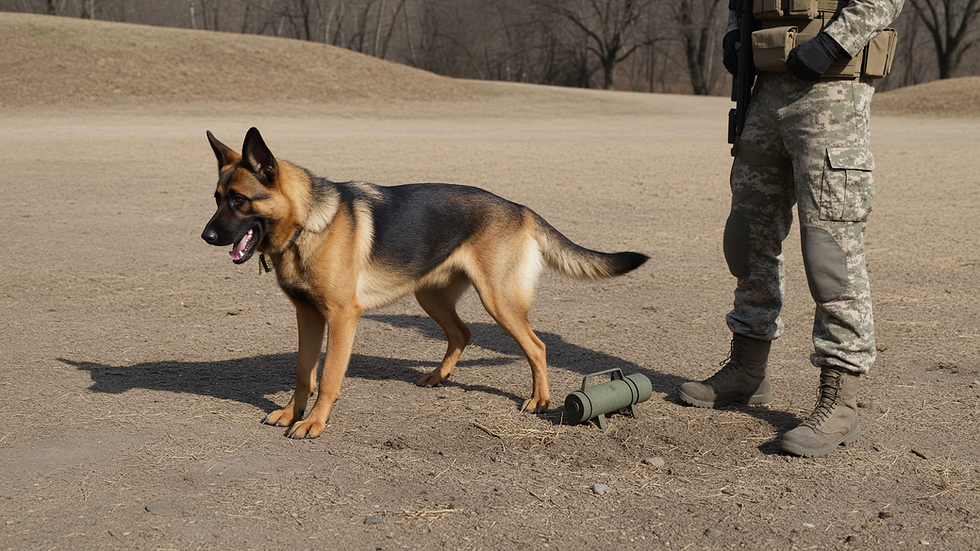
After mastering basic obedience, dogs that show strong potential move into advanced detection and patrol training. This phase significantly increases the difficulty and begins shaping the specialized skills these dogs will need in real-world operations.
Detection Training: Dogs are taught to identify specific explosive odors using a variety of training aids. Handlers work with the dogs in increasingly complex environments — from open fields to vehicles, buildings, and confined spaces. The goal is for the dog to give a clear, consistent alert when it finds the target scent.
Key elements of advanced detection include:
Working through multiple distractions
Searching large areas methodically
Indicating accurately without false alerts
Maintaining performance even when tired or under stress
Patrol and Apprehension Work: Alongside detection training, dogs develop their patrol skills. This includes:
Tracking and following human scent
Building searches
Controlled aggression and suspect apprehension
Off-leash obedience during high-stress situations
During this phase, trainers begin to identify which dogs show the greatest aptitude for different roles. Some dogs excel at detection work, while others demonstrate exceptional drive for patrol and protection. This assessment helps guide future assignment decisions.
The training is deliberately challenging. Dogs are pushed to work through fatigue, noise, and difficult terrain. Only those that maintain reliability and focus are considered for the next major step: selection into the special operations K9 program.
In the next post, we’ll cover the demanding selection process that determines which dogs are chosen for Navy SEAL team assignments.


Comments