
Ambush in the Wadi – When My Teammate Went Down

Mission 4
Pre-Mission Briefing
The briefing was short and direct. We were tasked with establishing an observation post on a ridgeline that overlooked a known supply route. Intelligence suggested the enemy had been using the route to move fighters and supplies under cover of darkness. Our job was to get eyes on the wadi, document any movement, and remain in position for twenty-four hours before extraction.
The terrain was the main concern. The route we needed to take followed a dry riverbed that cut between two steep hills. The wadi offered good cover from observation, but it also created a natural choke point. The platoon chief warned that if we were compromised, the high ground on either side would give the enemy a significant advantage. He emphasized movement discipline and the need to keep spacing tight but not bunched up.
Malakai and I would be on point for the movement to the observation post. Once we reached the position, Malakai would help clear the immediate area before we settled in. The team was carrying extra water and ammunition because resupply during the mission was not planned. Medical support would be limited to what we carried ourselves until we could call for extraction.
I remember the intelligence officer adding one final note before we broke. He said the route had been used heavily in the past month and there was a possibility of pressure-plate devices in the wadi floor. He looked directly at me when he said it.
“Trust the dog.”
We stepped off at 2100 hours under a half moon.
The Mission
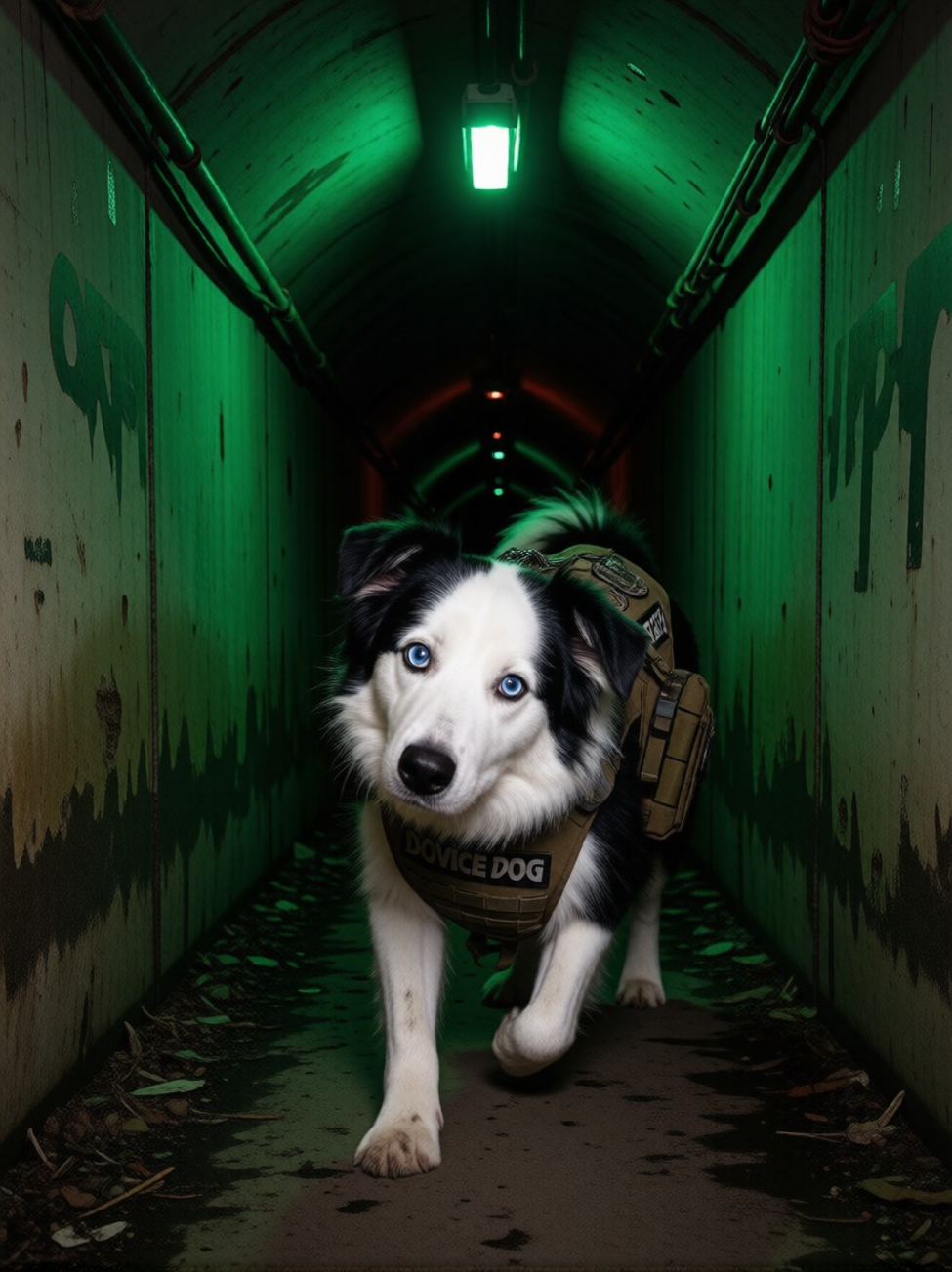
The movement started quietly. We moved in single file with Malakai and me at the front. The wadi was wide at first, the ground hard-packed from seasonal flooding. Malakai worked with his usual focus, nose low, body moving in that steady, methodical pattern he used when he was searching. Every twenty or thirty meters he would pause, test the air, then continue.
The first two kilometers passed without incident. The moon gave us just enough light to move without night vision. I kept my weapon at the ready and watched Malakai’s body language more than the ground ahead. After two tours I had learned that his reactions were faster and more reliable than anything I could see myself.
Around the three-kilometer mark the wadi narrowed. The walls rose steeply on both sides, and the path forced us into a tighter formation. Malakai slowed. His head dropped lower than usual. He took three steps, stopped completely, then took two more before stopping again. I raised my fist and the column behind me froze.
I studied the ground in front of us. Nothing looked disturbed. No fresh dirt, no wires, no metallic glint. Malakai remained locked in place. I trusted him. We shifted the route slightly to the right side of the wadi and continued moving.
We had gone another four hundred meters when the first shots came.
The initial burst was high and to our left, impacting the wadi wall above our heads. Someone shouted a contact report. I dropped to one knee and pulled Malakai close to me. The team behind us began returning fire while the rear element moved to establish a base of fire.
The enemy had taken positions on both ridgelines. They had waited until we were deep in the narrow section before opening up. Tracers crisscrossed above us. I could hear the distinctive sound of AK fire mixed with the sharper cracks of our own weapons.
Petty Officer Second Class Ramirez, who was two positions behind me, took a round through his left thigh. He went down hard. The man behind him immediately dragged him behind a small rock outcropping while the rest of the team laid down suppressive fire.
Malakai stayed pressed against my leg. I could feel the tension in his body, but he didn’t break position. I gave him the stay command and moved to Ramirez. The round had gone through the meat of his thigh. It was bleeding heavily but hadn’t hit the femoral artery. I applied a tourniquet while the rest of the team continued to engage the ridgelines.
Malakai never left my side. Even as rounds impacted the ground around us, he remained in his alert posture, watching the high ground. When one of the enemy fighters attempted to move to a better position on our left, Malakai gave a short, sharp bark — the only sound he made the entire engagement. The warning gave us just enough time to shift fire and pin the man down.
We held the position for nearly forty minutes. The enemy fire eventually slackened as our overwatch element on the higher ground began to take them under fire. We used the lull to move Ramirez farther back and prepare for extraction. The call went out for a medical evacuation. Because of the terrain, the helicopter would have to land at the mouth of the wadi and we would have to carry Ramirez out.
Malakai stayed with me the entire movement. He continued to scan the ridgelines even as we withdrew. When we finally reached the extraction point, the medevac bird was already on the ground. We loaded Ramirez and the rest of the team boarded. Malakai and I were the last ones on.
The flight back was quiet. Ramirez was stable, but the mood in the bird was heavy. We had been ambushed in a place we should have been able to control. The only reason we hadn’t taken more casualties was because Malakai had given us that early warning when he slowed in the wadi. Without it, we would have walked straight into the kill zone.
After-Action Report & Reflections
The AAR was held the next day. The platoon commander walked through the timeline, the decision to use the wadi, and the moment contact was made. Several operators noted that the enemy had clearly been waiting for us. The intelligence had been good, but the enemy had adapted faster than we expected.
When the discussion turned to Malakai, the tone changed. Multiple people credited him with the early alert that kept us from walking directly into the heaviest part of the ambush. The team member who had been directly behind me said he had seen Malakai stop and had known something was wrong even before the first shots.
Later that night I sat with Malakai outside our tent. Ramirez was going to be fine, but the image of him going down stayed with me. I had seen teammates wounded before, but this one felt different. It had happened on a mission that should have been relatively low risk. The wadi had turned into a trap, and the only thing that had given us any warning was the dog sitting beside me.
I cleaned the dust from Malakai’s coat and checked his paws. He leaned against my leg the way he always did after a mission. His breathing was steady. There was no sign of the stress I was carrying. He had done his job — warned us, stayed close during the fight, and remained calm while rounds impacted around him.
I thought about how much the team now depended on him. This was only our fourth insertion together, and already his nose and instincts had prevented casualties twice. The weight of that responsibility was starting to settle on me. Every time we went out, I was not only responsible for my own life and the lives of the men behind me, but for his as well.
The bond was deepening in ways I hadn’t expected. It was no longer just about clearing buildings or finding IEDs. It was about trust in the worst moments — the moments when everything went wrong and the only thing you could count on was the animal beside you.
I stayed outside with him for a long time that night. The stars were clear above the mountains. Malakai eventually lay down and rested his head on my boot. I kept one hand on his back, feeling the rise and fall of his breathing.
The insertions were no longer just missions. They were becoming a record of everything we were surviving together. And the cost was starting to show.




Comments