
Fast-Roping into Hell – Helicopter Insertion Under Fire
Pre-Mission Briefing
The briefing was held at 2200 hours in the operations center. The target was a high-value facilitator who had been moving weapons and fighters between two provinces. Intelligence placed him in a compound in a narrow mountain valley approximately twenty-five kilometers northeast of our position. The terrain was the main problem. The compound sat on a steep ridgeline with limited vehicle access and no suitable landing zone close enough for a quiet insertion. The decision had been made to insert by helicopter using fast-rope.
Our platoon would split into two elements. The main assault force would fast-rope directly onto the compound. My team would insert one hundred meters to the north on slightly higher ground to establish an overwatch and blocking position. Malakai and I would be the first off the rope on our bird so we could clear the immediate area and push toward the compound.
The intelligence officer warned that the valley was known for small-arms fire during helicopter operations. The enemy had learned to wait until the birds were committed before opening up. We were told to expect contact on the way in or immediately after landing. The fast-rope window was tight — we would have roughly ninety seconds on the rope before the helicopter had to move.
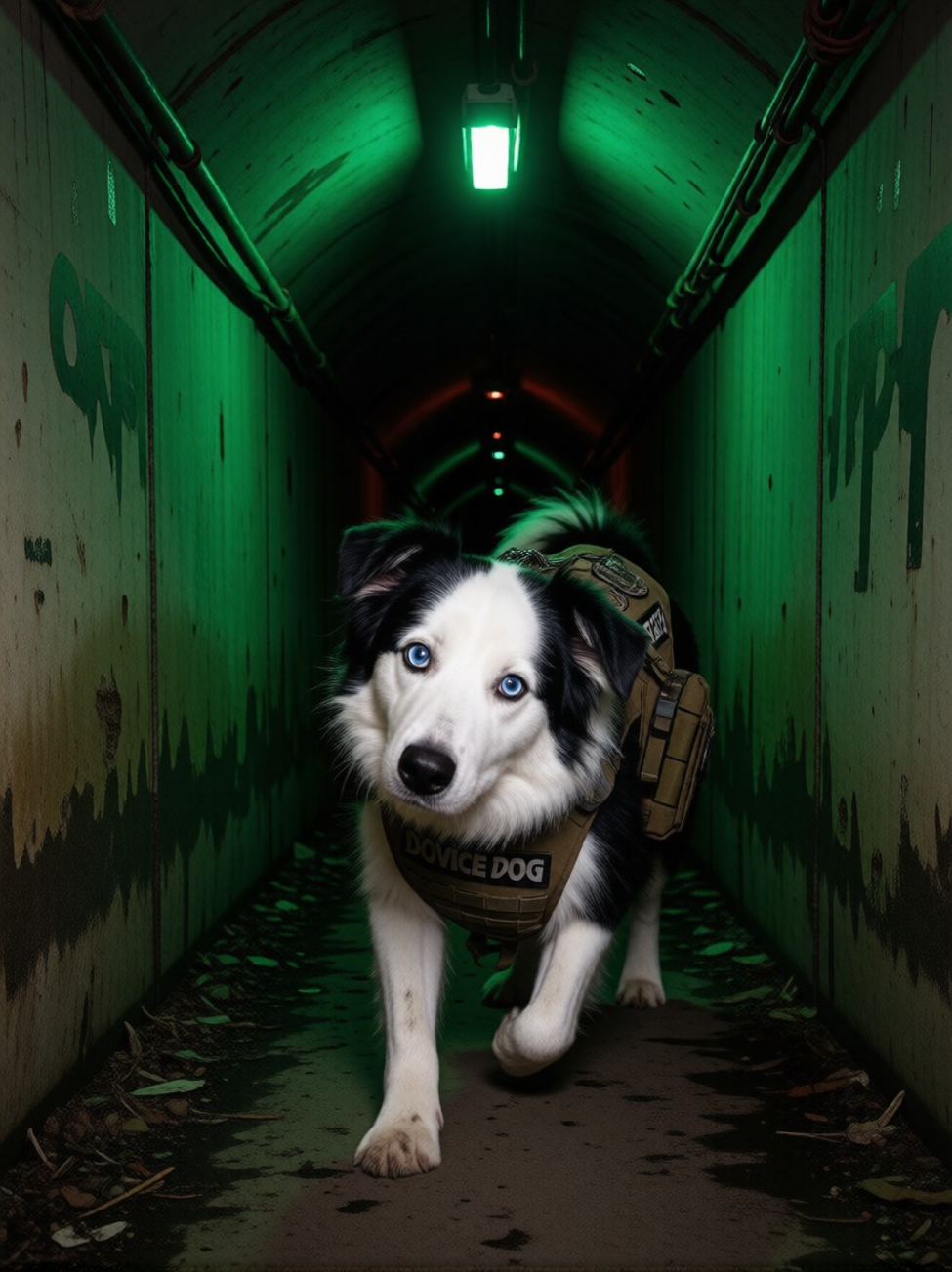
I looked across the table at Malakai lying on the floor beside my chair. He was already in his harness. The specialized rig that let him ride secured against my chest during the descent had been checked twice. He seemed completely unbothered by the noise and activity around him. I reached down and rested my hand on his head. He gave one slow blink and leaned into the touch.
The platoon chief went over the extraction plan, medical contingencies, and the possibility of a hot extraction if things went bad. He ended the briefing the same way he always did.
“Fast-rope is unforgiving. Watch your spacing. Trust your dog. Don’t get hung up on the rope.”
We stepped off the birds at 0315.
The Mission
The flight in was low and fast. The two MH-60s flew nap-of-the-earth, following the contours of the mountains. Inside the cabin the red lights were on. Malakai sat between my knees, body pressed against my legs. Every time the helicopter banked he adjusted his weight without complaint. I could feel the steady rise and fall of his breathing through the harness.
The valley appeared below us suddenly. The compound was a dark cluster of buildings against the ridgeline. As we flared for the fast-rope, the first bursts of small-arms fire started from the south side of the valley. Tracers arced up toward the birds. The door gunner opened up immediately.
The crew chief gave the command. I stood in the door with Malakai secured against my chest, his front paws on my harness. The rope dropped. I gripped it with both hands and stepped out into the dark.
The descent was violent. The helicopter was moving, the wind was strong, and the ground was uneven. Malakai stayed completely still against me, his body rigid but controlled. I could feel his heartbeat through the harness. Halfway down, a burst of fire walked across the rocks to our left. I heard the rounds crack past us. The rope burned through my gloves. When my boots finally hit the ground I released the rope and moved ten meters to clear the landing zone.
Malakai was already working. The moment I gave him the search command he dropped his nose and began sweeping the area between our position and the compound. The rest of the team fast-roped in behind us. The helicopter pulled away into the darkness, the sound of its rotors fading as it gained altitude.
We moved quickly toward the compound. Malakai stayed tight to my left side, his body language focused. Every few steps he would pause, lift his head, then continue. The small-arms fire was still coming from the south. Our overwatch element was already engaging targets.
As we reached the outer wall, Malakai stopped completely. His entire body locked. He stared at a section of ground just inside the wall. I raised my fist. The team behind me froze. I studied the area through my night vision. Nothing looked disturbed, but Malakai had never given a false alert in combat.
I called the explosive ordnance disposal team forward. They confirmed the presence of a pressure-plate IED buried just inside the main entrance. We bypassed it and entered through a side breach. Malakai led the way into the first building. The compound was empty, but fresh tracks and radio equipment showed the target had been there recently. He had likely slipped out during the initial contact.
We cleared the remaining structures while the main assault element searched the primary building. The firefight to the south intensified. One of our birds took a round through the tail rotor and had to return to base. We were now on a single-helicopter extraction.
By the time we consolidated and moved to the extraction point, the sun was starting to show on the eastern ridgeline. The remaining helicopter came in hot, door gunners firing as it flared. We fast-roped up this time, Malakai once again secured against my chest. The climb out felt longer than the descent. Rounds continued to impact the rocks around us until we were finally clear of the valley.
After-Action Report & Reflections
The AAR was held the following afternoon. The platoon commander reviewed the timeline, the decision to fast-rope, the contact on insertion, and the discovery of the IED. The operation was considered a partial success. The target had escaped, but we had disrupted his network and gathered valuable intelligence from the equipment left behind. No friendly casualties.
When the discussion turned to Malakai, several operators mentioned how quickly he had identified the IED. One of the newer guys asked how a dog could be more reliable than the handheld detectors we carried. I told him the truth. The dog didn’t get tired the same way electronics did. He didn’t get distracted by radio chatter or the sound of incoming fire. He simply worked.
That night I sat outside again with Malakai beside me. The fast-rope insertions were becoming more frequent, and each one carried its own layer of risk. Having him secured against my chest during the descent changed the equation. I was responsible for both of us on the rope. If something went wrong, we would go down together.
I thought about the moment on the ground when Malakai had frozen at the IED. There had been no dramatic bark or growl. Just that complete, absolute stop. It had saved lives. I also thought about the way he had remained still against me during the descent while rounds passed close enough to feel. Most dogs would have panicked. Malakai had treated it like another training evolution.
The weight was growing heavier with each insertion. This was our third mission together in Afghanistan, and already I could feel the cumulative effect. The tunnel in Mission 2 had been close and personal. This one had been loud and exposed. The common thread was Malakai. He never hesitated. He never questioned. He simply did the job and then returned to my side as if nothing had changed.
I rested my hand on his back and felt the steady rhythm of his breathing. In the quiet after the mission, that sound had become one of the few things that still felt steady. The insertions were stacking up. The risks were increasing. But as long as Malakai was beside me, I knew we would keep going into the next valley, the next compound, the next rope.
That was the night I stopped thinking of him as just my dog. He had become my partner in every sense of the word.




Comments