
FIRST KILLS GRAPHIC VERSION

The sun was already punishing when we moved through the ruined outskirts of that Iraqi town. Dust hung in the air. Every doorway and alley could hide something that wanted us dead.
I was still new to the deployment. My first military working dog was at my left side, quiet and locked in. He wasn’t just a tool. He was the best early-warning system I had. Nose working, ears up, body reading the ground the way only a well-trained dog can.
We closed on a half-collapsed building when his posture changed. Weight shifted forward. Head lowered. A low, continuous growl started in his chest. That was all the warning I needed.
A man broke from cover with a pistol already up.
I fired once. He dropped.
That was my first kill. I still remember the exact weight of the trigger, the sudden silence after the shot, and the way my dog never looked away from the body until I gave him the release. There was no celebration. Just the cold understanding that if I had hesitated, one of us would have been the one on the ground.
That moment welded something between us that training alone never could. Trust earned under fire is different. It’s permanent. He taught me how to read the silence, how to move when the ground felt wrong, and how absolute the bond between handler and dog has to be when the only thing standing between you and death is each other.
Years later that same bond found a new shape in Malikai.
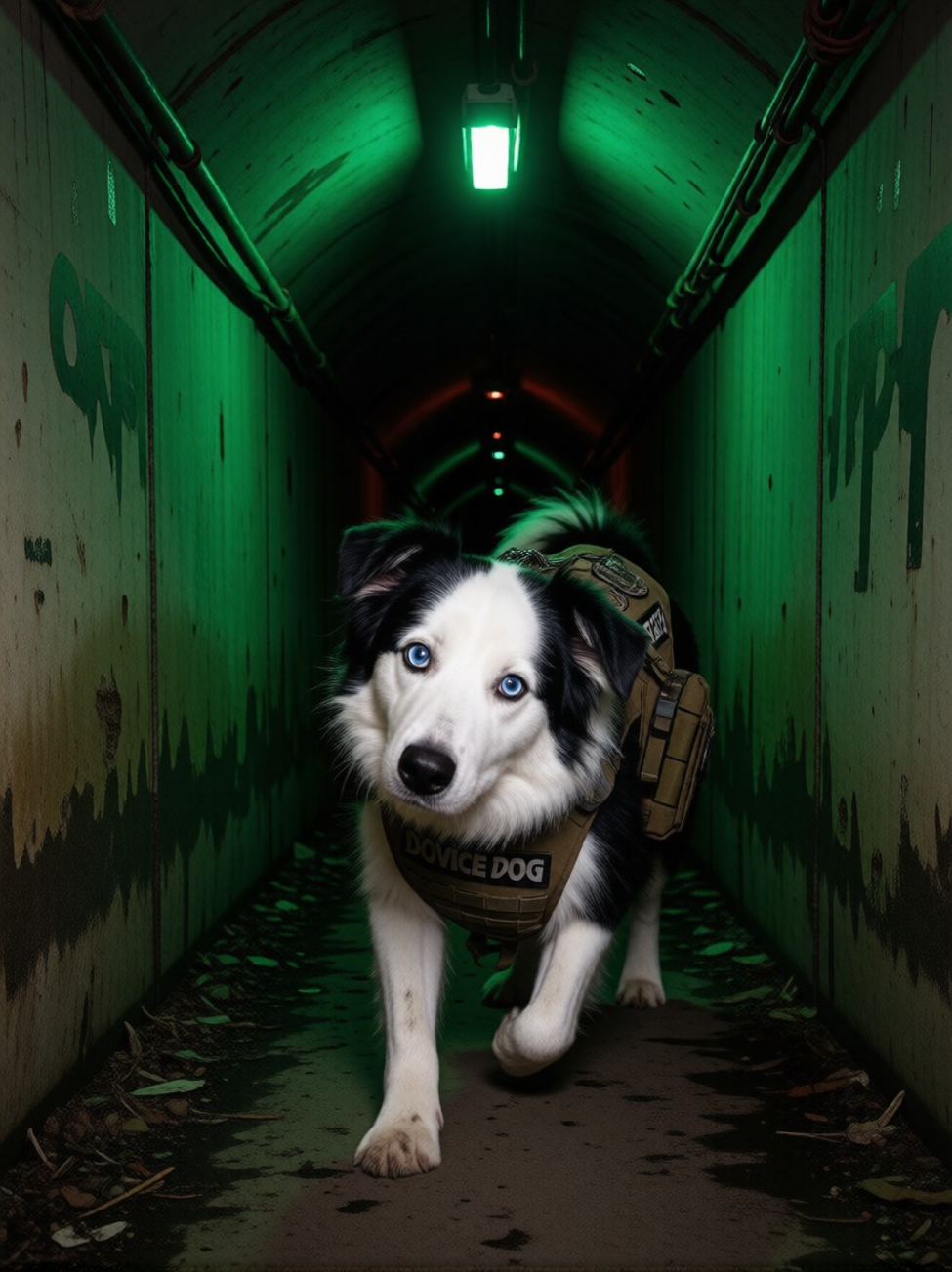
He came to me as a young Australian Shepherd with a different kind of drive—less pure aggression, more relentless focus, and an almost human sense of loyalty. Where my first dog had been all edges and intensity, Malikai carried a steady, quiet competence. He could work a building, track a scent through chaos, or simply sit at my side for hours without needing constant direction.
Afghanistan was his first combat deployment with me. The air in that high valley was thin and sharp. Cold enough to sting the lungs. We had been moving for hours through the kind of terrain that swallows sound and makes every shadow feel occupied. Malikai stayed tight to my left leg, head low, reading the wind.
I felt the change in him before I saw anything. His body locked. A short, hard alert. Then he committed.
Two fighters broke from the rocks ahead—one cutting left, one right. Classic split. Malikai went for the closer man without hesitation. He hit at full speed, jaws locking onto the throat and side of the neck. The man went down hard, thrashing, trying to pry the dog off. Malikai held and shook, crushing and tearing. Blood sprayed across the rocks and across Malikai’s muzzle. The fighter’s struggles weakened fast. By the time I reached them, the man was already dying—eyes wide, hands still clawing weakly at the dog’s fur, blood pouring from the ruined neck. Malikai did not release until I gave the command.
The second fighter raised a rifle toward the dog.
I shot him twice. Center mass. He dropped.
Malikai never left the first man until I gave the release. Even then he stayed close, low and coiled, eyes still working the high ground, blood dark on his muzzle and chest. That was his first engagement. His first kill alongside me. He didn’t celebrate. He just did the job and then checked on me the same way he always would afterward—quiet, steady, waiting for the next command.
I remember the silence that followed more than the shots. The way the valley suddenly felt too quiet. Taking a life never gets clean. The first one in Iraq had left a mark. The ones that came after added weight. By the time we reached that valley in Afghanistan, I already carried more than I liked to admit. Each confirmed kill sat somewhere behind the ribs, heavy and permanent.
Malikai was the only thing that made it bearable.
He didn’t ask questions. He didn’t need explanations. After a contact, he would simply stay near me—close enough that I could feel him breathing, close enough that the world felt a little less empty. At night, when the adrenaline drained and the faces started coming back, he would settle against my leg or at the foot of the cot like he understood the load I was carrying. Some nights I talked to him. Quietly. Things I never said to anyone else. He never judged. He just stayed.
That bond became the one constant that outlasted the deployments. When the missions ended and the structure of the teams fell away, Malikai was still there. Aging. slower. But still watching. Still steady. The same dog who had gone in on his first deployment and never once hesitated when it mattered.
The kills stay with you. The weight doesn’t leave. Over time it stopped feeling like separate memories and started feeling like a single continuous pressure behind the eyes, in the chest, in the way sleep never came clean. Hypervigilance became the default setting. Crowds felt wrong. Silence felt dangerous. The body stayed ready for a threat that no longer existed in the same form. That’s the part they call PTSD. For me it was simply the residue of too many moments where hesitation would have meant someone I was responsible for didn’t come home.
Malikai carried me through the worst of it. Not by fixing anything. By remaining. By being the one living thing that still made sense when everything else had been stripped away. When the career ended, when Lisa died and I became a widower, when the open road was all that was left, he was still there in the passenger seat—older, stiffer, but still locked onto me the same way he had been in that Afghan valley.
In the final chapter of all of this—Dead Ground—that long debt starts to settle. The work with Malikai, the years of carrying the weight together, finally forced the reckoning I had kept moving to avoid. Healing the hero isn’t dramatic. It isn’t a single clean moment. It’s slower and harder than any contact I ever walked into. It’s choosing to stop running. It’s allowing the dog who had already given everything to show me that survival was never the only goal. Living had to come next.
The first dog taught me how to survive the kill.
Malikai taught me how to keep living after it.
And in the end, he is the reason I finally learned how to heal.




Comments